

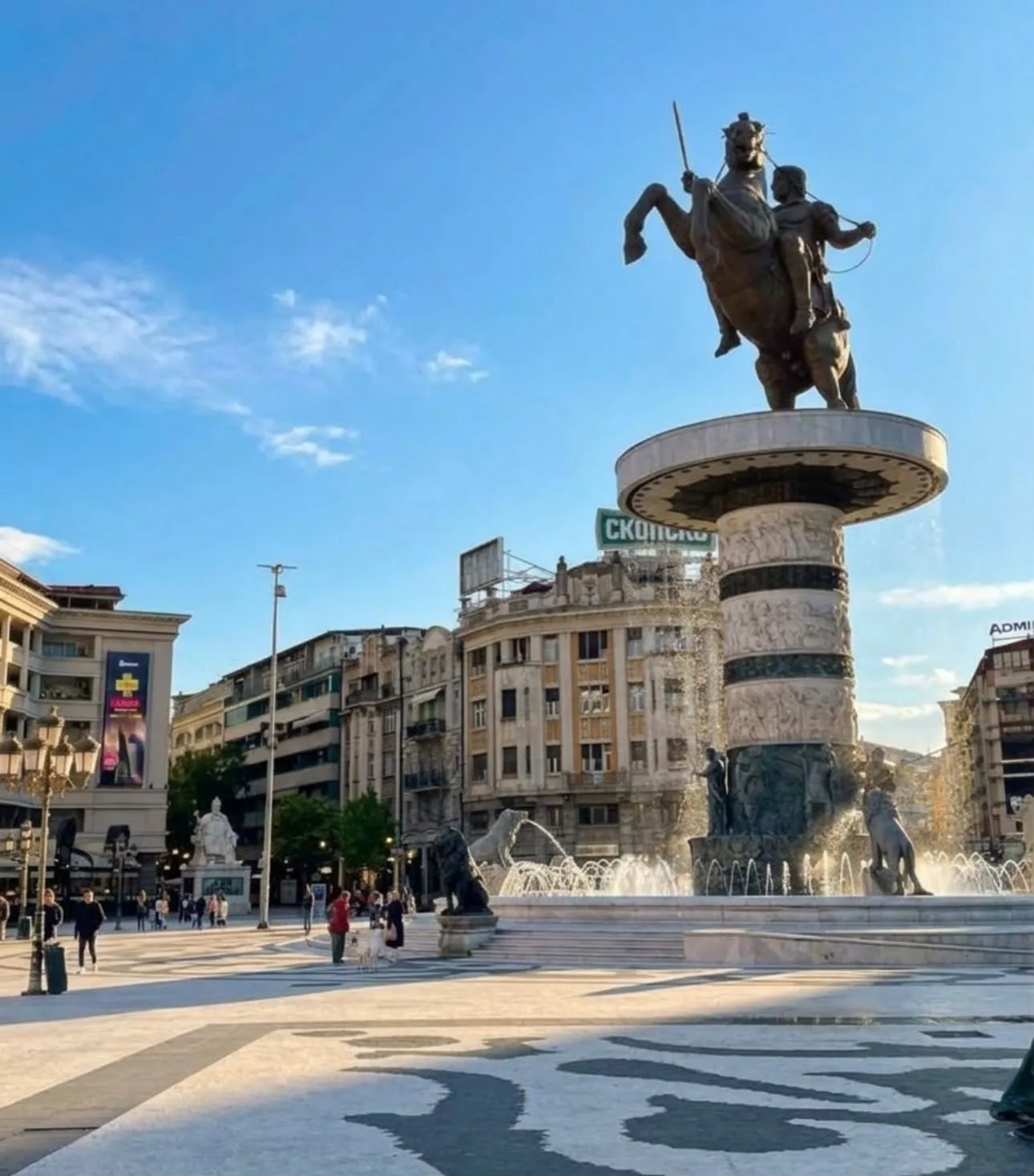
Crossing the threshold of Skopje means immersing oneself in one of Europe’s most magnetic, vibrant, and eclectic capitals. Reborn with extraordinary energy after the devastating 1963 earthquake and shaped over the years by a fervent architectural boldness, the city offers travelers an inspiring experience that is both intimate and monumental. In this unique context, Soviet Brutalism coexists in surprising harmony with imposing neoclassical facades and the ancient soul of the East, while the aromas of spices rising from the alleyways intertwine with the lively buzz of cafés lining the banks of the Vardar River.
The ideal starting point to begin this journey is Macedonia Square, a picturesque urban living room dominated by the colossal statue of the Warrior on a Horse. Around this vast pedestrian area stand elegant colonnades, dramatic fountains, and imposing buildings that create an almost theatrical atmosphere, always bustling with life. Just a few steps from the square lies the undisputed symbol of the city’s continuity: the Stone Bridge. Built in the 15th century under the patronage of Sultan Mehmed II atop the foundations of an ancient Roman structure, this monument connects contemporary Skopje to its Ottoman roots. Crossing it on foot is a true journey through time, leaving behind the institutional buildings of modernity to venture into the centuries-old history of merchants and artisans.
After crossing the Vardar River, the atmosphere shifts completely as you enter the Stara Čaršija, the Old Bazaar—one of the largest and best-preserved Ottoman-era districts in the entire Balkan peninsula. Strolling through its cobbled alleyways continuously stimulates the senses, thanks to the inviting aroma of grilled meats, the rich scent of Turkish coffee served in traditional copper pots, and the rhythmic beat of metal artisans at work. Exploring the neighborhood, you come across ancient caravanserais like Suli Han and Kapan Han, once shelters for merchants along the Silk Road and now atmospheric courtyards housing art galleries, academies, and cozy outdoor venues. Not far away stand out the thirteen domes of the Daut Pasha Hamam, a majestic 15th-century bathhouse complex elegantly transformed into the National Art Gallery, and the Mustafa Pasha Mosque, perched on a hill with peaceful gardens overlooking the city skyline.
Ascending the paths winding up from the bazaar, you reach the ramparts of Skopje Fortress, known as Kale, whose earliest walls date back to the 6th century under the reign of Emperor Justinian. From its surrounding walls, visitors can enjoy a 360-degree panoramic view of the Vardar River, the valley, and Mount Vodno, offering the perfect perspective to decipher the capital’s complex geography and historical layering. Heading back toward the modern center along the pedestrianized street Ulica Makedonija, the route leads to the Memorial House of Mother Teresa of Calcutta. Born in Skopje in 1910 under the name Anjezë Gonxhe Bojaxhiu, the saint is honored in a structure of unique and expressive architecture, erected on the exact site of the Catholic church where she was baptized, housing personal memorabilia, handwritten letters, and an intimate prayer chapel.
Beyond its historical and cultural treasures, the capital offers immediate access to unspoiled nature, reachable in less than an hour from the historic center. A short bus ride or cable car trip takes you up Mount Vodno to admire the Millennium Cross, a massive 66-meter-high structure overlooking the entire valley, perfect for walks and hikes. About thirty minutes away lies the spectacular Matka Canyon, a fjord nestled between steep rock walls where visitors can rent a kayak or sail down the Treska River by boat to explore Vrelo Cave, considered among the deepest underwater caves on the continent.
For those wishing to combine urban exploration with deep physical rejuvenation, Skopje is also home to a premier body care landmark: My Spa Tailored Massage Studio, located at Ul. 50-ta Divizija 33. Far more than just a conventional spa, this center stands out for its strictly medical and physiotherapeutic approach. Founded by Vlatko Milchevski and Aleksandra Milchevska, the facility relies on the expertise of a team specializing in sports rehabilitation, therapeutic massages, and osteopathic or chiropractic techniques. It is the ideal spot to unwind tension accumulated after long walks on the bazaar’s cobblestones or to recharge after mountain excursions, while also collaborating with key local entities such as Makedonski Telekom, Replek, Skopje City Mall, Macedonia2025, and the organization Women in Tech through workshops and events focused on workplace stress management. The blend of scientific expertise and high standards has earned My Spa an outstanding international reputation, making it a recommended stop for both local residents and travelers seeking true physical renewal.
To round out the city experience, indulging in the local culinary tradition is a must. The table features irresistible specialties like Tavče Gravče—spiced beans baked in earthenware dishes—and Šarplaninski Ćevapi, seasoned meat patties served with soft somun bread and freshly made ajvar. Meals are traditionally paired with local Rakija or a cold Skopska beer, while quiet moments in the bazaar call for classic Turkish coffee or fragrant mint tea. The best time to plan a visit is during spring and autumn, when temperatures are ideal for walking. For getting around, while the center and bazaar are easily explored on foot, the city’s iconic red double-decker buses and local taxis provide quick, affordable connections to all surrounding destinations.